The Direct Relationship 06 - Subscription Products

From one-off purchases to everyday relationships
Not so long ago, buying everyday essentials was fairly straightforward. You ran out of something, went to a shop, bought another one and repeated the process a few weeks later.
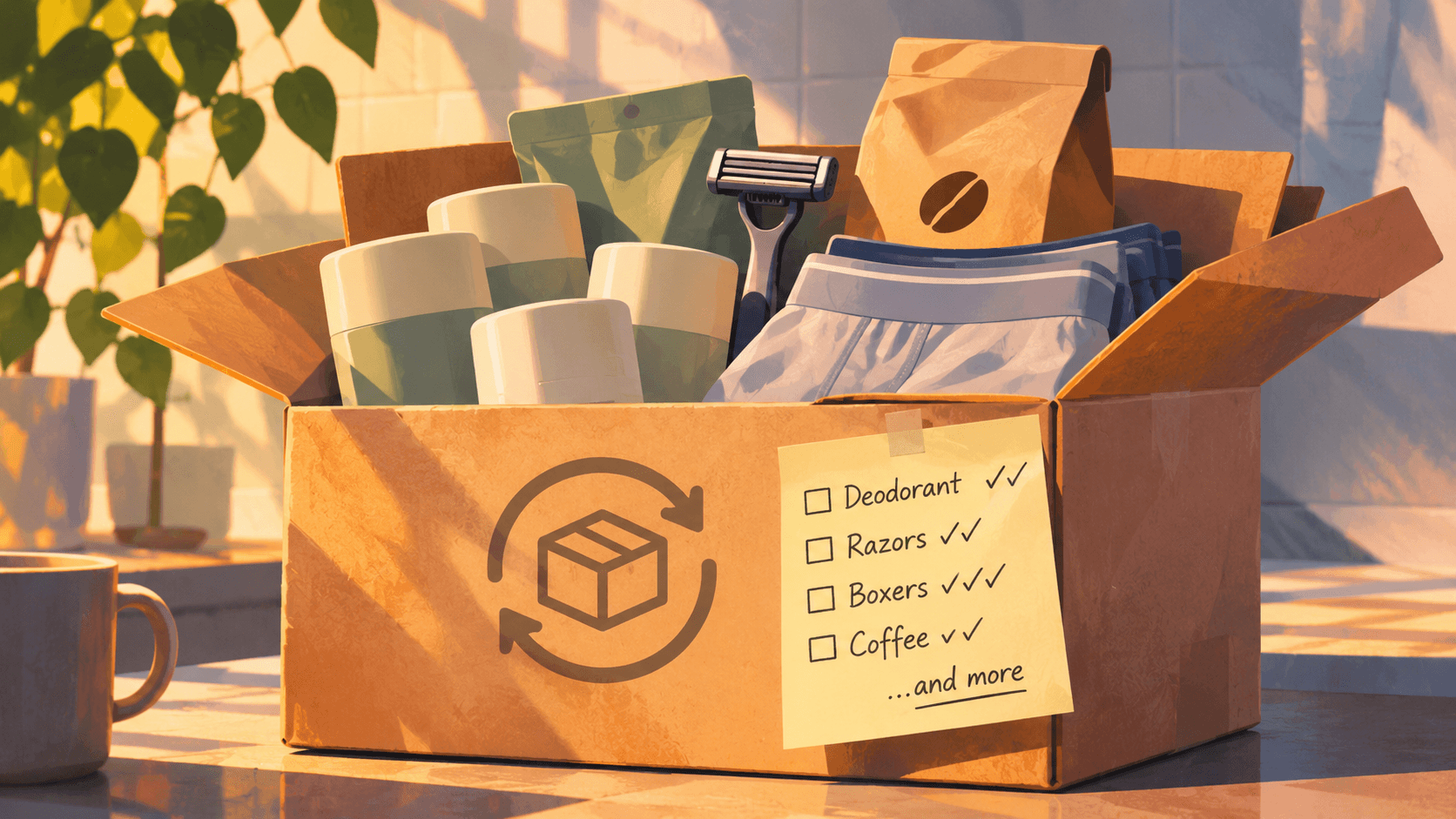
Today, everything from deodorant and razor blades to boxer shorts, coffee, pet food and evening meals can arrive automatically at your door. No shopping list, no last-minute trip to the supermarket, and ideally, no running out.
Brands like Smol, HelloFresh, Butternut Box and the growing number of direct-to-consumer subscription businesses have recognised something interesting. Customers don't necessarily want to keep buying the same product. They simply want to keep using it, and that creates an opportunity to build a very different kind of relationship.
Convenience gets customers through the door
The initial appeal of a product subscription is usually simple. It's convenient, it can offer better value, and it removes one more thing from an already busy life.
Smol delivers laundry and household cleaning products. HelloFresh delivers ingredients and recipes. Butternut Box delivers tailored meals for dogs. Grooming and underwear brands offer similar convenience for products people replace regularly.
These businesses aren't necessarily selling something entirely new. They're changing how customers access something they already need. For brands, the commercial attraction is obvious. Recurring purchases offer more predictable revenue, greater visibility of demand and opportunities to build long-term customer relationships.
But there's a catch. A recurring payment isn't necessarily the same thing as a loyal customer.
The problem with subscriptions
We've probably all experienced it. A subscription starts brilliantly, but after a few months the timing isn't quite right. You've accumulated more laundry capsules than you need. You're going away for a fortnight. The dog has gone off its favourite food. Or you've simply accumulated more boxer shorts than any reasonable person needs. Suddenly, something that was supposed to make life easier becomes another thing to manage. Many subscription brands already recognise this, offering customers the flexibility to change delivery dates, adjust quantities, skip orders or pause subscriptions altogether.
But there's an opportunity to go further. Customers' lives aren't fixed around a delivery schedule. Needs change, routines change and circumstances change. A great subscription shouldn't just be automatic or flexible. It should be responsive to the individual.
From subscriptions to personalisation
A customer account shouldn't simply be somewhere to update payment details or manage deliveries. Many subscription businesses already offer useful flexibility and personalisation, but there's an opportunity to build on those foundations. Imagine a subscription that understands how quickly you use a product, anticipates when you might need more, and makes it effortless to adjust your next delivery. Rather than simply responding to customer instructions, the digital experience could become a genuinely helpful part of everyday life.
A meal subscription could learn which recipes your family enjoys, suggest alternatives and help you plan around holidays or busy weeks. Or a pet food service that adapts as your dog grows older, changes weight or develops different dietary needs.
The possibilities extend beyond simple convenience. Brands can introduce relevant product recommendations, personalised offers, rewards, early access to new ranges and thoughtful communications that make customers feel understood. None of this needs to be intrusive or complicated. In fact, the best experiences often feel remarkably simple. The technology does the hard work so the customer doesn't have to.
Loyalty isn't about making it difficult to leave
There's a temptation with subscription businesses to focus heavily on acquisition and retention metrics. How many people signed up? How many cancelled? How long did they stay? These are important commercial measures, but they don't tell the whole story. Somebody who stays subscribed because cancelling is difficult isn't necessarily loyal. They might simply be frustrated.
A more valuable relationship is one where customers stay because the product and experience continue to meet their needs. That means making it easy to pause, change, skip or cancel. It means being transparent about upcoming payments and deliveries. And it means recognising that a customer who takes a break might be perfectly happy to return. Sometimes, giving somebody the freedom to leave is exactly what gives them the confidence to stay.
The opportunity beyond the box
For subscription brands, the physical product might be the beginning of the relationship, rather than its entirety. Consider the opportunities around the products themselves.
A grooming brand might offer advice, tutorials, product discovery and exclusive launches. A pet food company could create personalised feeding guidance, health and wellbeing content, or rewards for long-standing customers. A food subscription could connect recipes, meal planning, preferences and family routines into a much richer experience.
These are opportunities to turn a transactional relationship into something more meaningful. Not every brand needs an app, a community or an elaborate loyalty programme. Sometimes a well-designed website and a genuinely useful customer account are enough. The important thing is understanding what customers actually value, then building the experience around it.
Building relationships that last
At Clock, we've spent years designing and developing custom digital platforms that connect businesses more directly with their customers. Subscription products present an interesting opportunity because the relationship doesn't end at checkout. Every delivery, account interaction and communication is another chance to make the experience better. That might mean integrating ecommerce, subscription management, customer data, fulfilment and personalised content into one connected experience. Or it might mean improving the small but important interactions that make an existing service easier to use. The right solution will be different for every business.
Ultimately, subscription brands have an advantage that traditional retail businesses have often struggled to achieve: an ongoing, direct relationship with their customers. But that relationship needs looking after.
The most successful subscription isn't the one that's hardest to cancel. It's the one customers are happiest to receive.
Our Blogs
Still here? Check these out!